
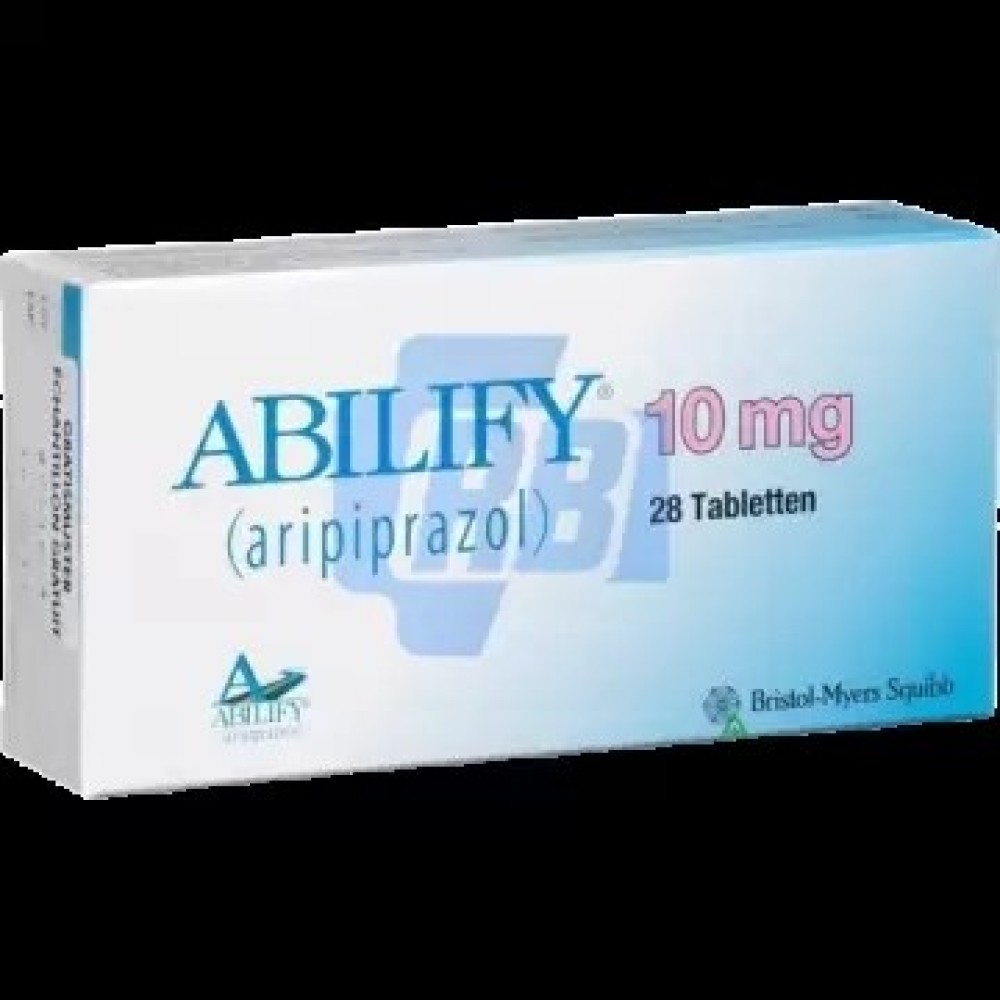
What Defines ABILIFY 10 mg Bristol - Myers Squibb
ABILIFY 10 mg Bristol - Myers Squibb is an antipsychotic medication primarily used for the treatment of mental health disorders such as schizophrenia, bipolar disorder, and as an adjunct treatment for major depressive disorder. Its active ingredient, aripiprazole, operates by balancing neurotransmitters in the brain, specifically dopamine and serotonin. This nuanced modulation helps in alleviating symptoms associated with psychotic behaviors, mood swings, and depressive episodes. With its unique pharmacological profile, ABILIFY stands out among antipsychotics due to its partial agonist properties, allowing it to reduce the intensity of psychotic symptoms while maintaining cognitive function.
Types, Formats, and Forms
ABILIFY 10 mg Bristol - Myers Squibb is available in several formulations to cater to diverse patient needs. The most common forms include oral tablets, orally disintegrating tablets, and liquid solutions. The oral tablets are available in different strengths, facilitating tailored dosing adjustments based on individual requirements. The orally disintegrating tablets provide a convenient option for those who may have difficulty swallowing pills, making it easier for patients to adhere to their treatment regimen. Additionally, the liquid form offers flexibility in dosing, particularly for pediatric patients or those who require precise adjustments. Each of these formulations is crafted to ensure optimal effectiveness and patient compliance.
The Key Differences of ABILIFY 10 mg Bristol - Myers Squibb
When comparing ABILIFY 10 mg Bristol - Myers Squibb to other antipsychotic medications, significant differences emerge in terms of efficacy, side effect profiles, and overall patient experience. Unlike many traditional antipsychotics, which primarily focus on blocking dopamine receptors, ABILIFY operates as a partial agonist at these receptors, which mitigates the risk of adverse effects such as sedation and metabolic syndrome commonly associated with typical antipsychotics. This mechanism allows for a more balanced treatment approach, often resulting in better patient-reported outcomes and improved quality of life. Furthermore, patients switching from other antipsychotics may find that ABILIFY offers a smoother transition with minimal disruption to their mental health stability. As such, for individuals seeking effective management of their conditions with a focus on tolerability and quality of life, ABILIFY 10 mg Bristol - Myers Squibb stands out as a compelling option.
Long-Term Effects and Suitability
Long-term use of ABILIFY 10 mg Bristol - Myers Squibb can lead to significant improvements in managing chronic mental health conditions. Patients often report sustained reductions in the severity and frequency of symptoms, which is crucial for maintaining daily functioning and improving interpersonal relationships. However, it is important to approach long-term treatment with caution, as there may be potential side effects such as weight gain, restlessness, or an increased risk of metabolic syndrome. Some groups, including pregnant women, minors, and individuals with pre-existing health conditions (such as cardiovascular issues or a history of seizures), may face contraindications or require closely monitored treatment. Therefore, a thorough discussion with a healthcare provider is essential to ensure the suitability of ABILIFY for each individual.
Practical Advice on Choosing and Using ABILIFY 10 mg Bristol - Myers Squibb
When considering or starting treatment with ABILIFY 10 mg Bristol - Myers Squibb, it is crucial to engage in a comprehensive evaluation with your healthcare provider to ascertain the most appropriate course of action tailored to your specific mental health needs. Discussing your full medical history, including any current medications and potential health concerns, will help the provider make informed recommendations. Starting with the lowest effective dose is generally advisable to monitor tolerance and effectiveness. Consistent adherence to the prescribed regimen, along with regular follow-ups to assess progress and make necessary adjustments, can significantly enhance treatment outcomes. It is equally important for patients and their families to stay informed about the medication's potential effects and side effects, ensuring open communication with the healthcare team to address any concerns promptly.
| Features | |
| Also known as | OPC-14597, OPC-31 |
| Blood pressure | Can cause orthostatic hypotension |
| Chemical name | 7-{4-[4-(2,3-Dichlorophenyl)piperazin-1-yl]butoxy}-3,4-dihydroquinolin-2(1H)-one |
| Dosage (medical) | Typically starts at 10-15 mg once daily for schizophrenia, 2-15 mg once daily for bipolar disorder |
| Dosage (sports) | Not applicable |
| Effects | Antipsychotic, mood stabilization, reducing symptoms of schizophrenia and bipolar disorder |
| Formula | C23H27Cl2N3O2 |
| Half-life | Approximately 75 hours |
| Hepatotoxicity | Low |
| Lab Test | Monitoring blood levels is not typically required, but lipid profiles, blood glucose, and weight should be monitored |
| Main action | Dopamine D2 and serotonin 5-HT1A receptor partial agonist |
| Raw Material | Aripiprazol |
| Side effects | Anxiety, insomnia, nausea, vomiting, blurred vision, somnolence, restlessness, tremor |
| Storage conditions | Store at room temperature, 15-30В°C (59-86В°F) |
| Substance class | Atypical antipsychotic |
| Trade name | Abilify, Aripiprex |
| Use in sports | None |
| Water Retention | Minimal |
| Manufacturer | Bristol - Myers Squibb |
| Packing | 28 tabs (10 mg/tab) |
-
52.00€
| Brand: | Bristol - Myers Squibb |
|---|---|
| Product Code: | EU1801 |
| Availability: | Out of stock |